
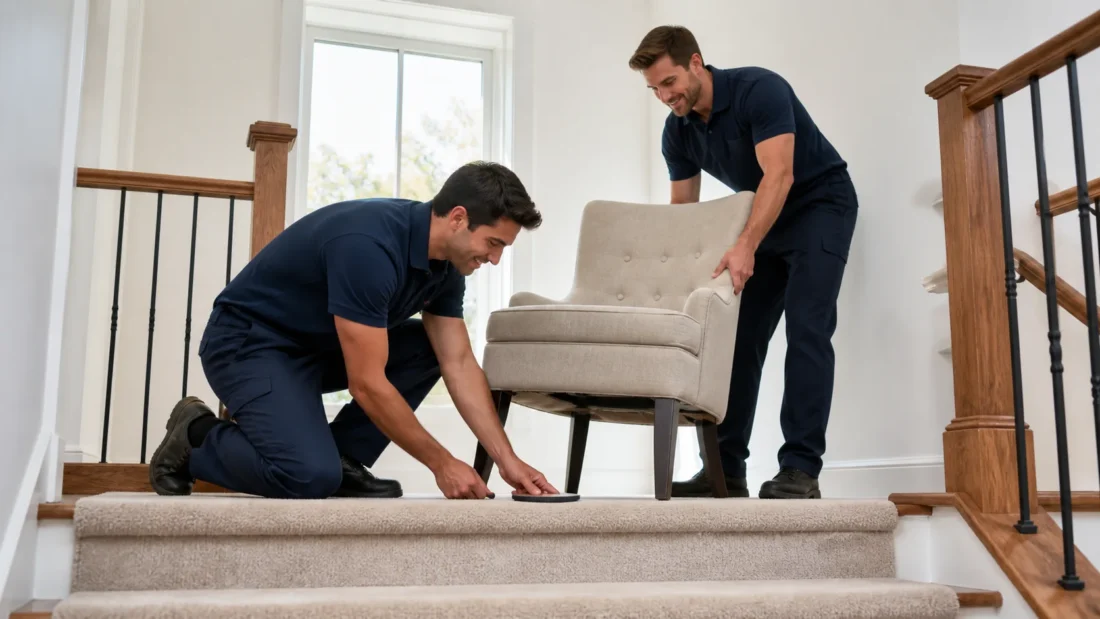
Should You Use Furniture Sliders for Carpeted Stairs?
Make Moving on Carpeted Stairs Safer and Easier
Moving furniture on carpeted stairs can feel scary and awkward. Heavy pieces, soft carpet, narrow steps, and tight corners are not a friendly mix, especially when you are getting ready for fall cleaning or holiday guests.
As seasons change, many of us start shifting things around the house. We clear space for decorations, set up extra beds, and bring stored items back into everyday use. That is when a lot of people reach for furniture sliders for carpet and start wondering if they belong on those carpeted stairs too.
Furniture sliders for carpet are small pads that sit under furniture legs or bases to help heavy pieces glide across flat carpeted rooms, hallways, and rugs. They cut down friction so you are not dragging and tearing your carpet every time you move a sofa. The big question is, should these sliders ever be used on carpeted stairs?
We want to walk through that honestly. We will talk about how sliders work, why stairs change everything, where sliders shine indoors, and what safer stair options look like so you can protect your carpet, your walls, and your back without adding new risks.
How Furniture Sliders for Carpet Actually Work
Furniture sliders for carpet are simple tools, but they are built with a few clear ideas in mind.
Most sliders share these traits:
- Flat bottoms that spread the furniture weight over a larger area
- Smooth or low-friction surfaces that glide over carpet fibers
- A soft top or cup to hold the furniture leg or base in place
When you put a heavy chair or dresser on sliders on flat carpet, the sliders reduce resistance. Instead of the furniture digging into the carpet pile, it floats over the top. That protects the fibers and makes big pieces feel much lighter to move.
There are different slider styles, and they each interact with carpet in a slightly different way:
- Hard plastic bottoms that slide easily across most carpet
- Felt-bottom sliders that are gentle and quiet on some surfaces
- Combo designs with rubber or gripping tops and smoother bottoms, like many of the products we design at Slipstick
All of these designs assume a few simple things: the floor is level, the direction of travel is mostly straight, and the entire slider base stays in full contact with the surface. On a carpeted room or hallway, those assumptions usually hold up.
On stairs, none of that is true. Steps are broken into short treads, there is an edge or nosing on each tread, and the surface angles shift as you go up or down. The slider bottom does not stay flat, weight keeps shifting from one step to the next, and gravity is working against you in a much stronger way.
The Real Risks of Using Sliders on Carpeted Stairs
Using furniture sliders for carpet on stairs might sound like a shortcut, but it brings some real risks.
First, stability drops fast. When you slide a heavy piece down or up steps:
- The weight tilts as it crosses the edge of each tread
- Sliders can catch, twist, or roll at the stair nosing
- Furniture can tip forward, backward, or sideways without much warning
That leads straight into personal safety concerns. If a piece starts moving faster than planned, you can lose your grip. It is easy to:
- Get pulled down the stairs as you try to hold on
- Slip if your feet are on carpet but the furniture is gliding too quickly
- Strain your back when you fight to control a heavy, sliding object
There is also a real chance of damage to the stairs and nearby surfaces. On carpeted steps, sliders can:
- Catch on metal stair edges or trim and tear the carpet
- Put sharp pressure right on the stair nosing and crush or gouge it
- Let furniture swing into railings, walls, or posts if it shifts to one side
All of this is why using sliders directly on carpeted stairs is generally not a safe idea, even if they feel fine on the flat carpet above or below the staircase.
When Furniture Sliders for Carpet Make Sense Indoors
So where do furniture sliders for carpet really shine? On flat, level areas. They are great for:
- Moving sofas, sectionals, and recliners in living rooms
- Shifting beds and dressers in bedrooms
- Sliding cabinets and storage units as you rearrange before holiday gatherings
- Clearing rooms for deep carpet cleaning or repair
Before you even think about stairs, it helps to test the furniture on a level floor:
- Place sliders under each leg or corner, keeping the piece balanced.
- Gently push from different sides and see how it moves.
- Check that none of the sliders are tipping or digging into the carpet.
If the furniture still feels hard to control on a flat surface, that is a clear sign that it does not belong on sliders on stairs at all.
A smart approach is to treat sliders as one part of a bigger plan:
- Use them to glide furniture to or from the stair landing on level carpet
- Stop at the top or bottom of the stairs
- Switch to safer tools like stair-rated dollies, lifting straps, or professional movers for the steps themselves
That way, you get the benefits of sliders where they are meant to work, without taking on extra stair risk.
Safer Ways to Move Furniture on Carpeted Stairs
If sliders are not the answer on stairs, what is? For most homes, the safest setup is a mix of people, planning, and the right tools.
Better options for carpeted stairs include:
- Team lifts with at least two people, one above and one below
- Stair-ready dollies or hand trucks with straps and solid wheels
- Lifting straps that keep the load lower and closer to your body
- Non-slip carpet runners, padded blankets, or cardboard sheets placed flat on steps to protect the carpet without creating a slippery base
Before you move anything, walk through a quick safety checklist:
- Clear the entire path, including landings and doorways
- Measure the stair width and the furniture, so you know it will fit
- Plan rest points at landings or wider steps
- Assign clear roles, like who leads, who supports, and who spots from the side
- Wear shoes with good grip and gloves that help you hold on
Slipstick products can still play a big role in this kind of move, even if they are not sitting directly on stair treads. You can:
- Use furniture sliders for carpet on the upper and lower landings to get pieces right to the stair edge
- Once furniture is in its final room, add grippers or pads under legs to stop unwanted movement and protect carpet or hard floors
- Use risers where you need extra height or easier cleaning access under furniture
This approach keeps each product doing the job it was designed to do, while you keep control of heavy items on the stairs.
Frequently Asked Questions About Furniture Sliders and Carpeted Stairs
Q1: Can I safely use furniture sliders on carpeted stairs?
A1: Using furniture sliders on carpeted stairs is generally not recommended. Sliders are built for flat, level carpet, not angled, stepped surfaces. On stairs, they can reduce friction too much, making heavy pieces unstable and harder to control. That raises the risk of injuries, tipovers, and damage to your stairs and walls. A better approach is to use furniture sliders for carpet on the level floor above or below the staircase and then switch to safer methods, like team lifting or using a stair-rated dolly, to handle the steps.
Q2: Will furniture sliders for carpet damage my stair carpet?
A2: On level carpet, quality sliders are designed to glide smoothly without tearing fibers. On stairs, however, the edges of each tread and the transition between steps increase the chance of snags, stretching, or tearing, especially if a heavy item drops from one step to the next. Sliders can also put concentrated pressure on stair nosings. If your goal is to protect carpeted stairs, temporary stair runners, padded blankets, or cardboard are safer ways to add a protective layer without creating a sliding surface under a heavy load.
Q3: What is the best way to move heavy furniture up carpeted stairs?
A3: The safest method is usually a two-person or larger team lift, with one person above and one below, using clear communication and regular rest breaks. For very heavy items, you can use a stair-rated dolly or hand truck with straps, and secure the item tightly so it does not shift. Protect the carpeted stairs with non-slip coverings and keep the path completely clear. Reserve furniture sliders for carpet for moving the item into position on the upper or lower level once it is off the staircase.
Q4: Are there any types of furniture sliders that are safer on stairs?
A4: No slider is truly stair-safe in the way most people want to use them, which is under a heavy piece sliding step by step. Some sliders have more grip or cushioning than others, but the basic problem stays the same: stairs are not flat, and weight shifts suddenly with each step. Even sliders with rubberized tops or softer bottoms can still cause unexpected movement or catching on the stair edge. For stairs, focus on solid lifting methods and stable, non-sliding contact with the carpet.
Q5: How can Slipstick products help if I cannot use sliders on the stairs?
A5: At Slipstick, we design furniture floor protection products that support a safer overall moving and setup process without relying on sliding on the steps. You can use furniture sliders for carpet on flat areas to rearrange rooms or move items to and from stair landings. Once furniture is in place, grippers, risers, or pads can help stop unwanted movement, protect carpets and hard floors, and reduce noise. By choosing the right Slipstick product for each surface, you protect your floors and lower risk at every stage of your move.
Protect Your Floors and Move Furniture With Ease
Make rearranging any room simple and stress-free with Slipstick furniture solutions designed for carpeted spaces. Explore our durable furniture sliders for carpet to protect your floors and prevent snagging or strain while moving heavy pieces. If you have questions about sizing or the best option for your furniture, contact us and we will help you choose the right fit.