
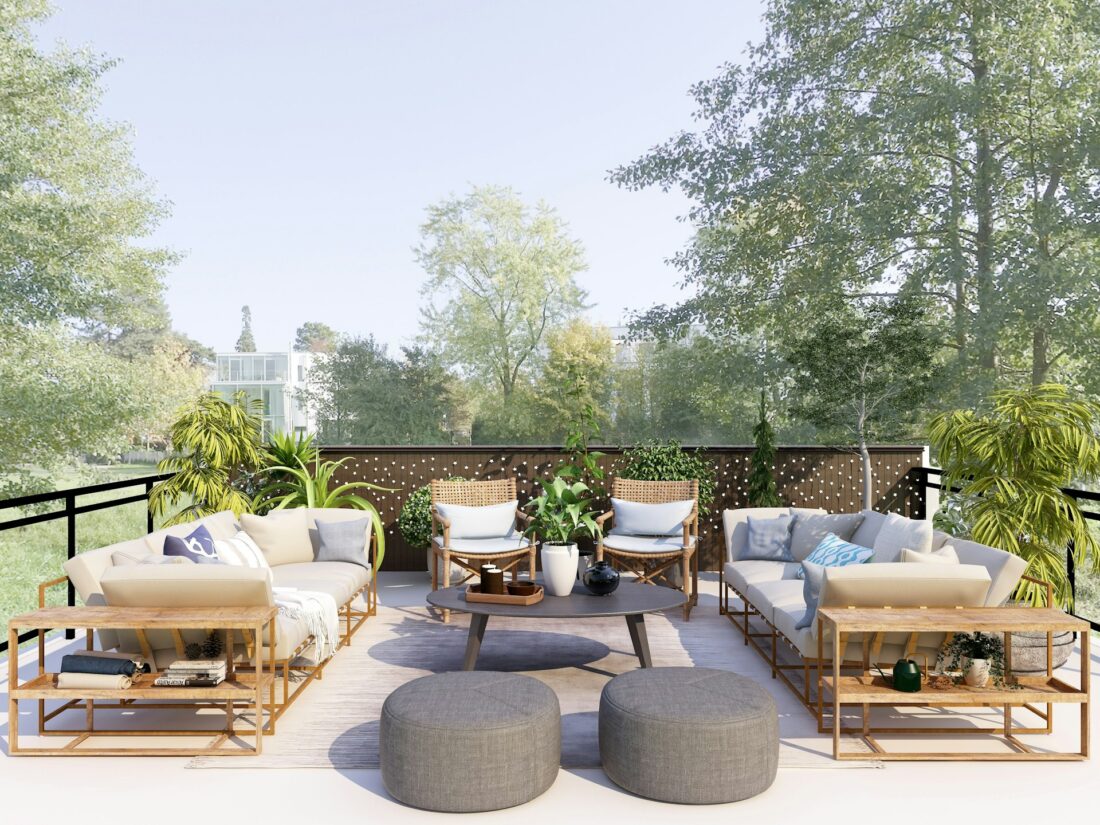
Outdoor Furniture Protectors for Summer Entertaining Spaces
Turn Your Patio Into a Summer-Ready Lounge
Outdoor furniture protectors might seem small, but they can decide whether your summer hangout feels easy and relaxed or scratched and wobbly. When chairs scrape, tables rock, or chair legs sink into the lawn, it takes the fun out of hosting.
In this guide, we will walk through how outdoor furniture protectors work, why they matter for your deck or patio, and how to choose the right ones for your space. Our goal is to help you turn your patio, deck, or balcony into the spot where everyone wants to gather, while keeping your floors and furniture in good shape for many summers.
Summer entertaining is hard on outdoor areas. People drag chairs, slide loungers, roll carts, and shift umbrellas all afternoon. Without a little protection under each leg or base, surfaces start to show it fast.
Why Summer Entertaining Is Tough on Outdoor Floors
Outdoor spaces in warm weather see a lot of action. Think about how many surfaces might be in a backyard:
- Wood decks
- Composite boards
- Concrete patios
- Stone pavers or bricks
- Outdoor tiles
- Grass, dirt, or gravel
Every time someone pulls out a chair or twists a heavy table, that pressure hits a tiny spot. Metal or hard plastic legs can scratch soft wood. Edges can chip tile or mark up composite boards. On concrete or pavers, they can leave scuffs or rust rings that are hard to remove.
Weather also joins the party. Rain, heat, and strong sun make many surfaces expand and contract. When boards or tiles shift even a little, sharp or narrow furniture legs can dig in deeper. That leads to:
- Scratches and gouges in deck boards
- Tiny cracks in tiles or pavers
- Rust stains from metal bases
- Indents or ruts in soft ground
One busy season of cookouts, birthday parties, and evening hangouts can leave a very tired-looking patio if nothing is protecting your surfaces.
How Outdoor Furniture Protectors Safeguard Your Space
Outdoor furniture protectors are small parts that attach to the bottoms of furniture legs or bases. They can be feet, caps, pads, glides, grippers, or wheels. Their job is simple: create a softer, smarter connection between the furniture and the ground.
Quality protectors spread out the load so the weight is not focused on one tiny point. Instead of a thin metal tube digging into a deck board, a wider, cushioned foot carries that weight. On grass or gravel, that wider footprint helps keep legs from sinking or tipping.
Good protectors can:
- Stop sharp edges from scratching wood, composite, or tile
- Reduce dents and chips on hard surfaces
- Keep furniture from sliding on smooth stone or tile
- Cut down on that loud scraping sound when chairs move
They also help with stability. On slightly uneven patios or pavers, protectors can grip better than bare legs. That means fewer rocking tables or tilting chairs when guests sit down.
At Slipstick, we design our feet, sliders, grippers, risers, and wheels with outdoor conditions in mind. The materials are built to handle moisture, sun, and temperature changes better than quick fixes like felt pads or tape, which tend to soak up water and wear out fast outside.
Choosing the Right Protectors for Your Outdoor Setup
Not every outdoor space needs the same type of protector. The right choice depends on your surface and your furniture style.
For surface type, a simple guide looks like this:
- Composite or wood decks: soft, non-marking sliders that glide quietly without scratching
- Smooth tile or sealed concrete: grippers or rubber-based feet with strong traction
- Stone pavers or textured concrete: slightly cushioned feet that adjust to uneven spots
- Grass, dirt, or gravel: wider feet or glides that spread the weight
Furniture legs and bases matter too. A slim metal tube leg needs a different protector than a thick wood square or a sled-style base. When you pick protectors, pay attention to:
- Leg shape: round, square, or flat
- Leg size: measure the diameter or width
- Material: metal, wood, plastic, or wicker
- Style: single legs, sled bases, or rolling casters
A quick checklist that works well:
- Measure each leg size
- Note the leg shape
- Confirm your main outdoor surface
- Match those details to a protector style designed for that setup
Looks matter in an outdoor lounge. Low-profile or color-matched protectors help furniture blend into your design. You want your guests to notice your cozy seating and string lights, not a bunch of random DIY fixes on chair legs.
Create Safer, More Comfortable Summer Gatherings
Safety might not be the first thing that comes to mind with outdoor furniture, but it shows up fast when something feels off. Unprotected furniture can lead to:
- Wobbly chairs that tip when someone leans back
- Tables that rock when people cut food or play games
- Legs that drop into gaps between deck boards
- Sliding chairs on smooth tile when someone sits down
By adding the right outdoor furniture protectors, you give your space a steadier base. Chairs stay level. Tables feel solid. Kids running around have fewer surprise hazards underfoot.
Comfort also gets a boost. When you shift a chair to catch the shade, it glides smoothly instead of screeching across the deck. When you move a lounge chair closer to the conversation, it stays where you put it. That makes events like family barbecues, kid parties, neighborhood potlucks, and evening drinks feel easier on both your guests and your outdoor space.
Across our Slipstick range, we focus on making high-traffic areas feel calm and dependable, so hosts can focus on food, music, and good company, not on chasing wobbly chairs.
Simple Installation and Summer Maintenance Tips
Most outdoor furniture protectors are quick to put on. You usually see a few styles:
- Push-on caps that grip the outside of the leg
- Insert-style feet that slide into hollow metal legs
- Adhesive-backed pads for wider flat bases
- Screw-in glides or casters for heavy or frequently moved pieces
Before you add anything, a bit of prep helps them last longer:
- Clean each leg or base to remove dirt, cobwebs, or old glue
- Dry surfaces fully so adhesives and friction grips work well
- Remove old pads or caps instead of stacking new ones on top
Once protectors are in place, they do not need much attention. A light summer routine is usually enough:
- Every few weeks, take a quick look at the feet on your most-used pieces
- Rinse off sand, dirt, or grass that may have built up
- After big parties or storms, check for any pieces that twisted or wore down
- Replace any worn protectors before your next event instead of waiting for damage
Slipstick products are designed to be low-maintenance, so you can spend your time enjoying your space instead of fussing over chair legs.
Frequently Asked Questions About Outdoor Furniture Protectors
1) Are outdoor furniture protectors really necessary if my deck is durable?
Even strong materials like composite decking, sealed wood, and concrete can scratch, chip, or stain from repeated pressure. Protectors work like a small buffer that helps keep your deck or patio looking good longer.
2) Can I use the same protectors outdoors that I use on indoor furniture?
Indoor pads, especially felt, tend to soak up water, hold dirt, and wear down quickly outside. That can actually make scratching worse. Outdoor furniture protectors are built with weather in mind, so they handle rain, sun, and temperature changes better.
3) Will furniture protectors stop my chairs from sinking into grass?
Narrow legs sink into lawns and soft soil easily. Wider protectors spread the weight over more ground, which greatly reduces sinking and makes chairs feel more stable on grass or gravel.
4) How do I know which size and style of protector to buy?
Measure the width or diameter of each leg, note if it is round or square, and look at what it is made of. Then match those details to a protector made for that leg type and for the outdoor surface you use most often.
5) How long do quality outdoor furniture protectors typically last?
Longevity depends on how often you use your space, the weather, and your surface type. With simple cleaning and the occasional checkup, Slipstick outdoor furniture protectors are built to give steady protection across many seasons of regular entertaining.
Protect Your Outdoor Furniture And Enjoy Your Space Longer
Extend the life of your patio setup with Slipstick solutions designed to prevent damage before it starts. Our outdoor furniture protectors help keep your pieces stable, scratch-free, and easy to move on any surface. If you have questions about choosing the right option for your space, simply contact us and we will help you get set up quickly.