
Furniture Moving Pads: Construction Details That Prevent Snags, Tears, and
Protect Floors and Furniture Before the First Lift
Furniture moving pads sound simple, but they are doing a big job. They have to protect your floors, your furniture, and your back, all at the same time. When the weather cools, many of us start shifting rooms for fall, making space for guests, or planning a move before winter. That is exactly when weak pads show their limits with snags, flat spots, and surprise scratches on the floor.
How those pads are built really matters. The fabric weave, the type of stitching, and the edge binding all work together to stop rips, prevent the padding from leaking out, and keep rough fibers away from delicate floors. At Slipstick, we focus on furniture care from the ground up, so by the end of this article, you will know how to spot furniture moving pads that are strong, smooth, and ready for real-life use, season after season.
Why Pad Fabric Weave Matters for Snag-Free Moves
Not all pad fabric is the same. Some feel like thin, loose blankets that catch on every corner. Others feel tight and strong, with a surface that glides instead of grabbing. That difference starts with the weave.
Loose-weave blanket pads often:
- Snag easily on sharp edges
- Shed lint that can hold grit against your floors
- Stretch or thin out in heavy spots
A tighter, more balanced weave usually gives you:
- Better tear resistance when you drag heavy items
- Less linting and fuzz on the surface
- A smoother contact area against wood, tile, or laminate
Fiber content matters too. Polyester and strong blends tend to hold up better when you are moving across different floor types. They handle light moisture and outdoor use around patios or garages more reliably than soft, fuzzy fabrics that soak up dirt and stay damp.
Dense, even weaves also spread pressure out across the pad. Instead of a heavy table leg pressing hard on one tiny spot, the force spreads across a larger area. That helps reduce pressure points that can leave scuffs or dull spots on hardwood, tile, and laminate. When you are sliding a big dresser across a room for a fall refresh, that even pressure can be the difference between a clean move and a scratched finish.
Stitching Strength That Stops Rips and Prevents Stuffing Leaks
Next, look at the stitching. Strong fabric does not help much if the seams pop or the padding shifts into lumpy piles. The right stitching pattern keeps everything locked in place.
Common patterns you will see include:
- Straight stitching around the edges
- Zigzag stitching for extra stretch and grip
- Box or diamond quilting across the whole pad
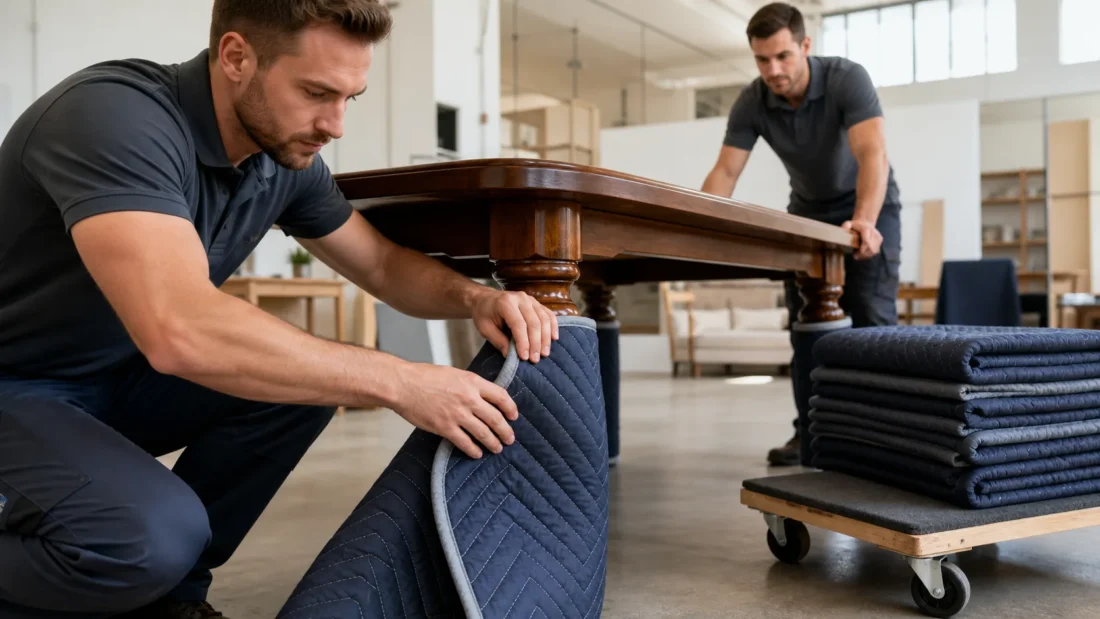
Quilting is what holds the inner padding to the outer layers. Box or diamond quilting stops the filling from bunching up in one corner when you pull a sofa across the floor. It also keeps the pad from ballooning or puffing up under weight, which can make furniture feel unstable as you move it.
Thread quality and stitch density matter as well. Heavy thread and more stitches per inch mean:
- Less chance of seams ripping open mid-move
- Less risk of stuffing working its way out
- Better control when sliding heavy sofas, beds, and appliances
In real life, that shows up as fewer snags on furniture edges, smoother moves through doorways, and pads that hold their shape even when you rearrange your home often. If you move things around every season, maybe swapping rugs, bringing in storage, or shifting things for holiday decor, solid stitching keeps those pads dependable instead of disposable.
Edge Binding That Shields Floors From Scratches
Edges are where a lot of damage starts. Raw or poorly finished edges can fray and curl. Once that happens, loose fibers can catch on furniture legs, toolboxes, or door frames, and small pulls quickly turn into big tears.
Good edge binding wraps and seals the edges so nothing is exposed. Features to look for include:
- Double-stitched binding that fully covers the cut edge
- Smooth, flat seams that do not feel rough to the touch
- Rounded corners that are less likely to curl or fold under
When the edges stay flat, you are less likely to have a corner roll underneath a furniture leg and bunch up. A rolled edge can act like a small bump or wedge that lets a hard surface scrape against your floor. On hardwood, that can leave scratches. On tile, it can leave marks on both the tile and the furniture.
Edge design also matters when you move across different surfaces. Strong, smooth binding glides better across:
- Door thresholds
- Area rug edges
- Garage or patio concrete
This is especially helpful in cooler seasons when you might be bringing furniture in from storage or shifting items between indoor and outdoor spaces. A well-finished edge lets the pad slide cleanly from one surface to another without catching.
Smart Choices and Seasonal Care for Furniture Moving Pads
When you are ready to buy or upgrade furniture moving pads, it helps to use a simple construction checklist. Look closely at:
- Weave density: Is the fabric tight and smooth, or loose and fuzzy?
- Stitch pattern: Is there quilting, not just edge stitching?
- Thread quality: Do the stitches look strong and close together?
- Edge binding: Are the edges fully wrapped and double-stitched?
Match the pad to how you use it. For a one-time apartment move, you might not need the heaviest build, but you still want tight weave and decent binding. For frequent office resets, retail moves, or at-home reorganizing, stronger quilting and reinforced edges will handle repeated sliding and stacking better.
Furniture moving pads work even better when they are part of a full floor protection setup. Sliders under furniture feet, non-slip grippers to stop pieces from walking across the room, and risers to lift items off delicate floors all help share the load. Used together, pads handle the big surfaces while other accessories manage the contact points.
To keep pads performing, a little care goes a long way:
- Shake out grit and small stones after each use
- Spot-clean spills and let pads dry fully before storing
- Roll or loosely fold pads instead of crushing them in tight piles
- Store them in a dry, clean spot where pests and moisture cannot get in
As fall rolls in, it is a great time to pull out your pads, inspect stitching and edges, and pair them with the right sliders and grippers before the rush of holiday decorating, college move-ins, downsizing, or end-of-year room refreshes.
FAQ
- Are all furniture moving pads safe for hardwood floors?
No. Pads with loose weaves, frayed edges, or exposed stitching can trap grit or unravel, which raises the risk of scratches. Look for tightly woven fabric, secure quilting, and fully bound edges that are smooth to the touch and designed for delicate floors.
- How thick should furniture moving pads be for heavy items?
Thicker is not always better if the weave and stitching are weak. For heavy furniture, pick pads with dense inner padding that is quilted in place, paired with strong outer fabric and reinforced edges. Good construction matters more than thickness by itself.
- Can I reuse the same pads for indoor and outdoor moves?
Often yes, if the fabric is durable and the stitching is tight. After outdoor use, always shake off dirt and small stones, then let the pads dry completely. That way, you do not carry grit or moisture onto indoor floors the next time you move furniture.
- How do I know when to replace my moving pads?
It is time to replace pads when you see frayed edges, loose or broken stitching, bare or thin spots in the padding, or fabric that feels rough and stiff from trapped debris. Any holes or open seams can catch on furniture and increase the chance of floor damage.
- Do I still need sliders or glides if I have moving pads?
Yes, if you want the best protection. Moving pads protect the furniture surface and cushion contact, while sliders or glides under the feet reduce friction and pressure on the floor. Used together, such as pads with quality sliders, you get smoother moves with less risk of scuffs or dents.
Protect Your Floors And Move Furniture With Confidence
Make every furniture rearrangement safer and smoother with Slipstick solutions designed to prevent scratches and scuffs. Explore our durable furniture moving pads to get reliable grip and easier movement on almost any surface. If you have questions about choosing the right option for your home or office, feel free to contact us and we will help you find the best fit.