
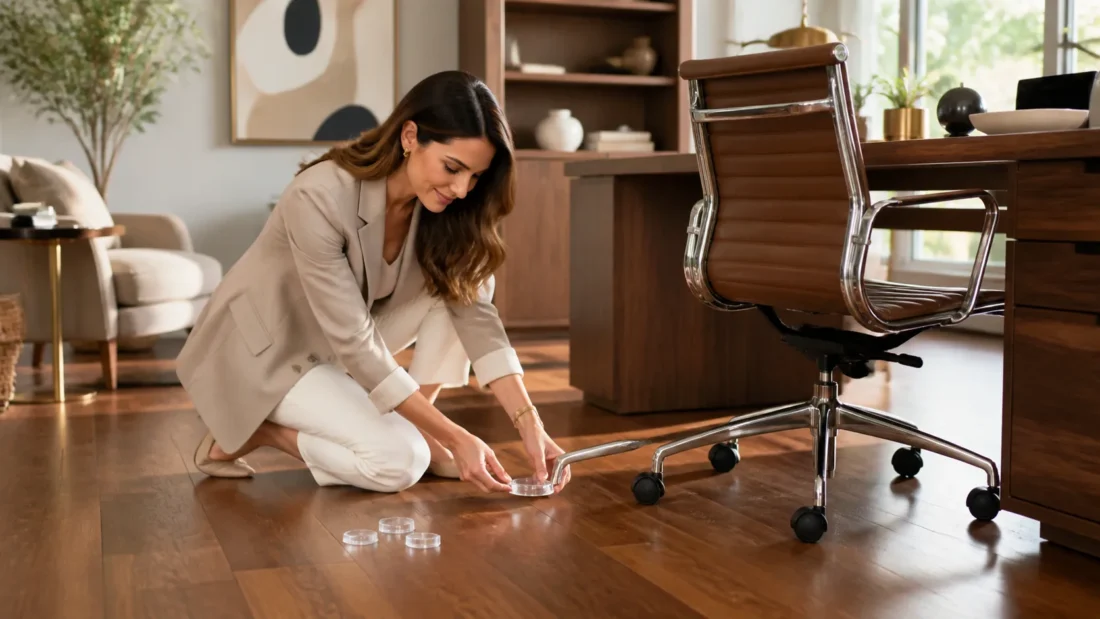
Unexpected Benefits of Floor Protectors for Furniture
Unexpected Benefits of Floor Protectors for Furniture
Floor protectors for furniture do a lot more than keep scratches away. When we use the right pads, feet, sliders, risers, and wheels, our spaces feel more comfortable, quieter, and easier to care for all year long.
As fall settles in and the holidays creep closer, homes and offices start to get busier. We move chairs, slide tables, shift sofas for decorations, and roll carts or file cabinets more often. That quiet movement can slowly mark up hardwood, vinyl, laminate, tile, and polished concrete. Quality floor protectors step in before the damage is done, giving our furniture and our floors a solid, safe base.
Protect Your Floors Before Holiday Guests Arrive
When the weather cools, people and pets start tracking in more grit, water, and mud. At the same time, many of us are:
- Rearranging living rooms for guests
- Pulling extra chairs around the dining table
- Sliding storage pieces in offices to make space for gatherings
All that shifting can leave tiny scratches and scuffs that add up fast, especially on smooth, hard floors. Even small moves during cleaning day, or while hanging lights and decorations, can leave marks.
Floor protectors for furniture step in quietly. They do shield the floor, but they also make rooms feel better overall. With the right feet and pads, chairs do not screech, tables feel solid, and furniture stays where we put it.
Slipstick’s Gorilla-branded ranges are built for busy homes and commercial spaces, where floors take a lot of traffic and furniture needs to stand up to daily use. The goal is long-lasting, high-performance protection, not a quick fix that falls off by the new year.
Preserve Floors and Finishes Longer Than You Expect
Many people think their furniture does not move if they never drag it. In reality, pieces shift a little every time someone sits, leans, or bumps into them. Those tiny movements grind dust and grit against the finish.
Floor protectors help by:
- Creating a barrier between legs and floor
- Trapping grit before it can dig into the surface
- Spreading weight over a larger, softer contact area
During fall and winter, when shoes bring in more sand and water, that barrier really matters. Instead of sharp edges or hard plastic pressing into the floor, you get a softer contact point that is kinder to the finish.
Different surfaces need different protectors. Pads and feet are designed so they do not yellow, sink in, or leave a ring on the floor. Matching the material to the surface helps keep hardwood, vinyl, laminate, tile, and polished concrete looking better for longer, with fewer repairs and less refinishing.
Make Rearranging and Cleaning Way Less Work
When it is time for a deep clean before or after the holidays, moving big pieces can feel like a workout. Sliders and low-friction glides can change that, turning heavy furniture into something one person can shift without straining.
They are especially handy when you want to:
- Pull a sofa away from the wall to vacuum behind it
- Slide a bed to grab lost items or clean under it
- Shift a large dining table to add more chairs
- Move file cabinets or storage units to reset an office layout
With the right floor protectors for furniture, you are not fighting drag or worrying about gouges. Sliders and wheels designed for heavy loads roll or glide smoothly instead of grabbing the floor.
This does not just save time; it also helps protect our backs and knees. Less lifting, fewer awkward pushes, and a much lower chance of slips while we are trying to clean or decorate in a hurry.
Quiet, Stable, and Safer Spaces All Year Round
A wobbly chair or rocking table is annoying and a little scary, especially around kids and pets. Properly matched furniture feet and pads can tighten up that shaky feeling by filling small gaps and gripping the floor better.
Good protectors can:
- Cut down on scraping and banging sounds
- Help chairs sit level on slightly uneven floors
- Keep recliners and sectionals from “walking” out of place
- Reduce the chance of tipping or sliding when someone leans
This is a big deal in apartments, condos, and multi-level homes, where every chair scrape seems to echo through the ceiling. It also matters in offices and shared spaces where people work, talk, or rest.
As the weather gets wetter, we see more slick entryways and area rugs over hard floors. When furniture feet stay put instead of sliding on smooth surfaces, the whole layout feels safer, especially when more guests or customers are moving through the space.
Extend Furniture Life and Protect Your Investment
Floors are not the only things that benefit. When we support furniture correctly, the furniture itself often lasts longer. Feet, pads, risers, and wheels help spread out the weight so joints, screws, and brackets are not taking all the stress at one tiny point.
Bed and furniture risers do double duty. They can:
- Add storage space under beds and sofas
- Improve airflow under pieces in damp or cold seasons
- Help keep dust and moisture from getting trapped at floor level
For landlords, property managers, and business owners, this can mean fewer damaged pieces at turnover and less wear in meeting rooms or waiting areas. Instead of replacing chairs or fixing loose legs all the time, furniture holds up better.
Slipstick’s Gorilla-branded protectors are built to last longer than thin felt dots or tape-on pads that peel at the corners. That durability helps create a more stable, low-maintenance setup in both homes and commercial spaces.
Choose the Right Floor Protectors for Every Room
Picking the right protectors does not need to be tricky. A simple way to decide is to look at three things: your floor, your furniture, and how the room is used.
Think about:
- Floor type: hardwood, vinyl, laminate, tile, polished concrete, or carpet
- Furniture type: fixed, frequently moved, or very heavy
- Use: quiet family room, busy office, rental, or commercial space
In general:
- Use non-slip rubber feet where you want grip and stability
- Use felt or soft glides where you want easy, quiet movement on hard floors
- Use sliders under heavy items you move a few times a year
- Use risers when you need extra height and airflow
- Use wheels that are designed for your specific floor type
Common mistakes include using hard plastic on soft floors or choosing protectors that are too small for the leg or base. Measuring and matching shapes, like round pads for round legs or caster cups for wheels, keeps everything stable and neat instead of clunky and obvious.
Upgrading from a mix of worn, mismatched pads to a coordinated, long-term solution before traffic picks up can make the whole season feel smoother.
Frequently Asked Questions About Floor Protectors for Furniture
Q: What type of floor protector is best for hardwood floors?
A: For hardwood, we suggest non-marking rubber or high-quality felt pads made for wood. They should fully cover each leg’s contact area and be attached firmly so they do not slip. For heavier or often moved pieces, look for glides or cups that combine gentle grip with smooth movement.
Q: How often should I replace furniture pads and feet?
A: Check them every few months, and always before busy seasons when you move things more. Replace any that are flattened, peeling, dirty with grit, or loose. Higher quality protectors usually last longer than thin, cheap stick-on pads.
Q: Can floor protectors stop chairs from making noise?
A: Yes. Good chair leg caps, pads, or glides can cut scraping and dragging sounds on hard floors. When the shape matches the leg and fits snugly, you also avoid rattling and wobble, which helps keep noise down between rooms or floors.
Q: Will floor protectors damage vinyl, laminate, or tile?
A: Quality, non-staining protectors designed for those floors will not damage them when installed correctly. Avoid hard, sharp, or discolored materials that could mark softer surfaces. Cleaning both the floor and the contact area once in a while helps keep grit from scratching.
Q: Do I need different protectors for home and commercial spaces?
A: Often you do. Commercial spaces usually have heavier traffic, heavier furniture, and more frequent rearranging, so they benefit from stronger, longer-wearing protectors. At home, many people like using the same higher-performance products under heavy pieces or on premium floors for extra peace of mind.
Protect Your Floors And Furniture With Confidence
Keep your floors looking flawless while making it easier to move and rearrange your pieces with our premium floor protectors for furniture. At Slipstick, we design solutions that help prevent scratches, scuffs, and noise so you can enjoy your space without worrying about damage. Explore the options that fit your furniture and flooring, and if you have questions about sizing or materials, just contact us so we can help you choose the right fit.